Learn about anti-abortion centers, more commonly known as ” crisis pregnancy centers” or “pregnancy resource centers”, the “services” they provide, their affiliations, and history.
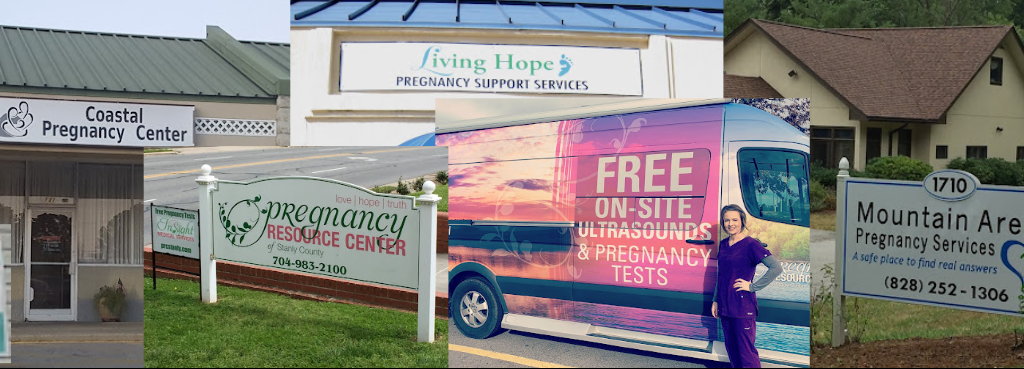
Learn about anti-abortion centers, more commonly known as ” crisis pregnancy centers” or “pregnancy resource centers”, the “services” they provide, their affiliations, and history.

Wednesday, Federal Judge Osteen decided to lift the injunction on North Carolina’s 20 week abortion ban. This now means that abortions after 20 weeks are illegal, unless there is a medical emergency. This decision defies the recommendations of all the named parties in the 2019 case.
“Neither this court, nor the public, nor counsel, nor providers have the right to ignore the rule of law as determined by the Supreme Court,”
Federal Judge Osteen
This ruling adds fuel to an already contentious midterm election year after the Supreme Court ruling propelled state-level politics into the spotlight. North Carolina Republicans in November will aim to snag the five additional seats they need for a veto-proof supermajority in the state legislature.
Republican lawmakers say a successful election season could open the door to further abortion restrictions when the General Assembly reconvenes early next year. Moore told reporters on July 26 that he would like to see the legislature consider banning abortions once an ultrasound first detects fetal cardiac activity — typically around six weeks after fertilization and before some patients know they’re pregnant.
Fundamentally, this law does not change much about abortion access in North Carolina; clinics in the state were not performing abortion care beyond 20 weeks. However, while abortions 20 weeks or later are rare (96% happen before 12 weeks of pregnancy), the enforcement of this law serves to criminalize those who are in need of abortions and those who help them obtain abortions.
Keep in mind, this law has been on the books since 1973. An injunction was placed on it and abortions were allowed up until viability, which is around week 23 or 24 of pregnancy.
“People seeking abortion later in pregnancy often do so because they face delays in accessing abortion care or dangerous complications with their pregnancy… Many need time to secure funds, time off work, transportation, and childcare, and often encounter other barriers in obtaining care, including medically unnecessary, state-mandated restrictions like North Carolina’s 72-hour forced waiting period.”
Jenny Black, President & CEO of Planned Parenthood South Atlantic
With the variety of TRAP laws already in place in North Carolina such as 72-hour waiting periods, biased mandatory counseling, state and federal funding restrictions, and mandatory ultrasounds, the enforcement of the 20 week ban only serves to add yet another barrier for pregnant people seeking abortion in North Carolina.
It is up to us to vote in legislators that will protect abortion access and push current legislators to remove the current restrictions. Remember, there is no choice when there is no access.
If you or a loved one are in need of abortion, please refer to my post, Abortion Providers in North Carolina.
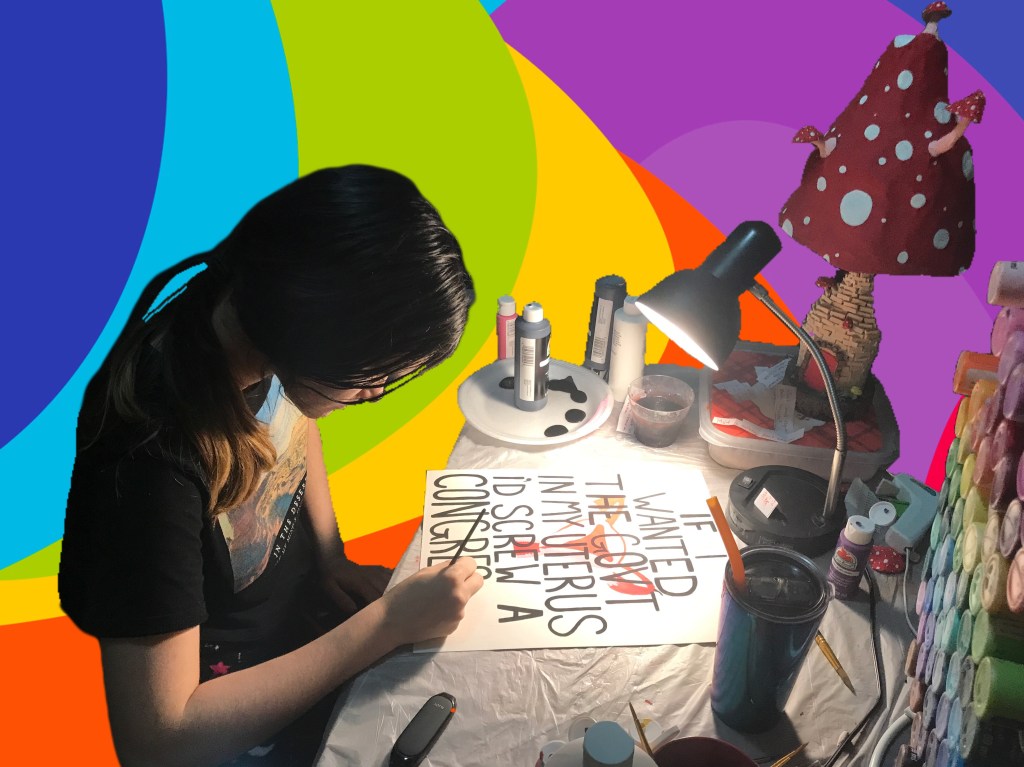
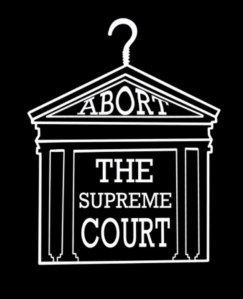
Since the passing of Roe v Wade (1973) and Planned Parenthood v Casey (1992), it has been heavily under attack by republican congress members. From January 1, 2021 to April 15, 2022, over 536 abortion restrictions have been introduced in 42 states; so far, 33 of those restrictions have been enacted in 9 states. When Roe is overturned, 13 states will immediately ban abortions & 13 more are likely to make it nearly impossible to get an abortion; thus leaving many in the South & the Midwest without access to reproductive healthcare for hundreds or even thousands of miles in some instances.
On Monday May 2, 2022, the SCOTUS draft majority opinion was leaked in regards to Dobbs v. Jackson’s Women’s Health Organization — a case that could (& most likely will) overturn Roe v. Wade & Casey v. Planned Parenthood. Our current SCOTUS is majoritively, 6 out of 9, both conservative & Christian, meaning that our rights to bodily autonomy, privacy, & receiving healthcare will likely be taken away in the coming months.

On September 1, 2021, Texas’ six week abortion ban went into effect. This outlaws any abortions once a fetal “heartbeat” is detected and does not allow for exceptions, even in cases of rape or incest. Rather than the state prosecuting abortion seekers and/or providers, S.B.8 allows for private citizens to sue abortion seekers and/or providers for $10,000 per abortion.
Fetal heartbeat abortion bans are a basic human rights violation and a crime against humanity according to the UN. Most people, unless they are actively trying to conceive, don’t realize they’re pregnant until week 7, meanwhile fetal “heartbeats” can be detected as early as 6 weeks. The term “fetal heartbeat” – especially before 6 gestational weeks – is misleading in the sense that it’s merely electrical cells (that would later form to become the heart), and what’s actually heard is actually the sonography machine at that point.
S.B. 8. has subsequently brought about detrimental effects to people who’ve became pregnant. This law has since caused physical, psychological and mental distress, trapping people into a cycle of poverty, forcing children as young as 11 carry a fetus to term, compelling chronically disabled people to carry a fetus to term, making people have to drive hundreds of miles to receive medical care, forcing people to preform back-alley abortions, overall strong-arming these people into carrying their pregnancy to term, whether or not they capable of bringing it to term.
Planned Parenthood released a briefing of 33 interviewees (view entire brief here) only 1 month and 10 days after the bill was enacted into law by Texas representatives and Governor Greg Abbott. The brief outlines the grave, horrific realities many pregnant people, even children, have gone through and will continue to have to go through unless this law gets repealed. Some women were petrified when they found out about their pregnancy because they weren’t sure how they were going to get out-of-sate for their abortion due to various factors like being on probation, undocumented, sexually assaulted, etc.
*All initials are pseudonyms to protect interviewees’ privacy.
-T.K. suffers from a chronic disease for which she has been unable to get
medication for eight months. She fears the stress of the pregnancy “would
probably kill [her].”
T.K. said she is not financially stable enough to raise a child. Having grown
up in poverty, she “[doesn’t] want that cycle to happen again.” She noted that
baby formula costs $18 per canister but she barely earns over $20,000 a year.
As a child, T.K. was sexually abused in the care of extended family. She
would not trust anyone to care for her child given the abuse she suffered. She was
relieved to secure an out-of-State abortion, but was worried that because of SB8,
“they’d be waiting to drag [her] off to jail when [she] got here because [she’s] from
Texas.
-Nurse practitioner T.W. saw a young teen who came from Texas to
Oklahoma after being raped and impregnated by her father. Unfortunately, the
family member taking care of her lacked the guardianship forms to be able to
consent to the abortion, and they had to turn her away.
-J.T. is in her mid-thirties with seven children, and recently lost employment
when they contracted COVID-19. She explained that she “can’t have another
child” and that her “seven children come first.”
J.T. was too far along to have an abortion in Texas and considered buying
“pills” online. With Mississippi appointments booking nine weeks out, J.T. woke
up at 4 a.m. to drive six hours to Oklahoma. She split up her children among
various caretakers. She said that hotel, food, and gas “took away over half of what
I make in the month…”
-I.O., in Houston, spoke of a twelve-year-old patient who came in with her
mother, a single working mother with other children. The mother said they could
not travel out-of-State—they had barely made it to the Texas health center. The
twelve-year-old said, “Mom, it was an accident. Why are they making me keep
it?”
Laws like Texas’ six week abortion ban are a dangerous and slippery slope that will lead to unnecessary traumatic and lethal consequences. Abortion bans prevent people from getting the necessary [and sometimes even life-saving] medical care they need. When a bounty is added on top of a ban, this traps people in a cycle of poverty, force them into parenthood no matter the readiness and/or desire to become a parent, and can enable domestic abusers (by holding either the abortion or the child, once its born, over the domestic victims head).
Laws like this must be fought against. In an effort to help save reproductive rights, right to privacy, and right to bodily autonomy: donate to your local Planned Parenthood (or any other reproductive health/abortion center), find a local organization that advocates for abortion rights, and urge your congress-member to pass the “Women’s Health Protection Act” and to repeal any legislation that prohibits abortion access.
 Craftivist The Activist
You must be logged in to post a comment.