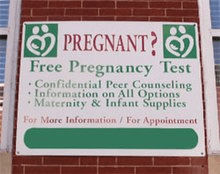
What are crisis pregnancy centers?
Crisis pregnancy centers, sometimes called pregnancy resource centers, are a type of non-profit organization with a sole purpose of discouraging pregnant people from getting an abortion. Some CPCs that qualify as medical centers only provide a narrow scope of medical services such as pregnancy tests, (limited) ultrasounds, and maybe STI testing. Some may give referrals to adoption agencies, financial and material assistance, while none of them offer referrals for abortion.
A large majority of crisis pregnancy centers are ran by pro-life, christian organizations that work to outlaw abortion. There are more crisis pregnancy centers than actual abortion clinics in America. For example, in North Carolina there are only 8 abortion clinics and nearly 100 CPCs.
How Are CPCs Funded?
Crisis pregnancy centers are funded through donations, churches, the Choose Life license plate program (which 33 states currently have), and tax-payer funds. Far too often I hear people say they don’t want their tax dollars paying for someone’s abortion, yet the majority of the public is unaware that our tax dollars instead go to fund fake abortion clinics, when instead that money could go towards free contraceptives, comprehensive sex education, and abortion clinics (all of which are statistically proven to lower abortion rates).
From 2001 to 2006, over $60 million has been funded to crisis pregnancy centers, most of this money had come from federal programs for abstinence-only education under the conservative Bush Administration. Additional funding has been distributed as “capacity-building” grants to 25 pregnancy resource centers in 15 states as part of the new $150 million Compassion Capital Fund. For this report, female investigators telephoned the 25 pregnancy resource centers that had received grants from the Compassion Capital Fund, requesting information and advice regarding an unintended pregnancy. According to their findings, 20 of the 23 centers (87%) provided false or misleading information about the health effects of abortion.
What Is The Problem With Crisis Pregnancy Centers?
Since CPCs are typically registered as non-profit organizations and are not qualified healthcare professionals, they do not have to follow the same regulations as healthcare professionals. This means they are not bound by HIPPA, meaning the patient’s private information can be given out and is not required to be kept confidential. Since CPCs are not held under the same standards as medical professionals, they often disseminate false information; they are are often caught lying to pregnant people about how far along into their pregnancy they are in an attempt to waste limited time to get an abortion; they are also known for lying about how abortion procedures work, potential complications of abortion, fetal development, the impacts of getting an abortion and STI information.
Deceitful Tactics Used By Crisis Pregnancy Centers.
Crisis pregnancy centers use a variety deceitful tactics on pregnant people seeking abortion, people who are in a very vulnerable position. Despite looking like legitimate clinics, most CPCs are not licensed and their staff are not licensed medical professionals. Most crisis pregnancy centers use similar wording as abortion clinics (“Women’s healthcare”, “women’s clinic”, “pregnancy clinic”, ”“pregnancy care”, “pregnancy resources”, and so on ) as another attempt to disguise themselves as a real medical facility. They may set up in a close vicinity to an actual abortion provider in an attempt to trick patients into going to the wrong building on arrival. Some even utilize a “mobile care clinic” where they have a van that they park near abortion clinics to trick pregnant people into getting an ultrasound and misleading them about the services they provide.
CPCs often use decades-old studies that have long been debunked by newer, more accurate medical advancements, and again are allowed to lie to people seeking abortion services. States, such as North Carolina, that have the Women’s Right to Know Act do not consider CPCs talk about abortion eligible to meet the standards of the Women’s Right to Know Act, which only wastes limited time to get an abortion.
How to Spot A CPC Online
After reviewing nearly 100 crisis pregnancy center’s websites in North Carolina, I found two common themes: they’re either super vague, or they have a lot of information. I always recommend checking out the one star reviews.
The ones that are full of information tend to use misleading and stigmatizing language, may list a church, or list a pro-life organization (such as Heartbeat International, Birthright, and Care Net). Sometimes they have a separate website for donors and/or affiliates to keep their patients from seeing that they have a direct connection with anti-abortion organizations – Heartbeat International actually reccommends this. They will talk about abortion procedures in a stigmatizing manner and only offer a small scope of medical services (mainly pregnancy tests and/or a limited ultrasound).
Sometimes local or state ordinances require CPCs to disclose online that they do not preform, refer, or recommend abortion services. The main spots I’ve found this disclaimer is at the very bottom of page, on about page, or under the services page.
Another way to spot a crisis pregnancy center online is looking for “”
Want to print off a handout to share with friends and family? Below is a free doc available that I created; donations are accepted. (Some information in the document is relevant to North Carolinians.)



 Craftivist The Activist
You must be logged in to post a comment.