The end of World War II marked the beginning of an unspoken era in our history: the baby scoop era. Conservatives, obsessed with an idyllic 1950s America that never really … Continue reading The Second Wave Baby Scoop
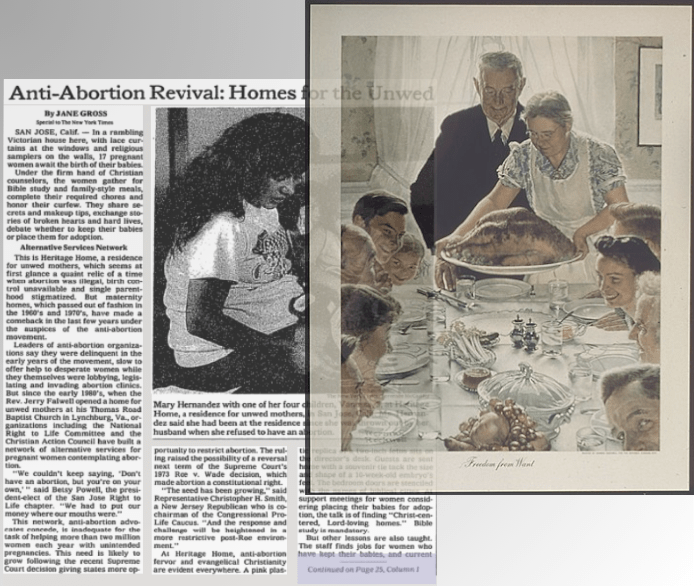
The end of World War II marked the beginning of an unspoken era in our history: the baby scoop era. Conservatives, obsessed with an idyllic 1950s America that never really … Continue reading The Second Wave Baby Scoop

Learn about anti-abortion centers, more commonly known as ” crisis pregnancy centers” or “pregnancy resource centers”, the “services” they provide, their affiliations, and history.
Last Wednesday, North Carolina Republicans filed the first anti-abortion legislation of the session…and it’s BAD. This bill would ban abortion from conception with narrow “exceptions” to save the life of the pregnant person. It lacks exceptions for rape, incest, and health of the pregnant person. In a desperate attempt to come off as more palatable — to both conservative Democrats needed to override the Governor’s veto and the public — the legislation has a very narrow exception to save the life of the pregnant person. However, we have seen that similar “exceptions” in other states with similar bans have been insufficient in reality for people in need of an abortion. The bill text also made sure to include that this exception “does not include any situation where the risk of death or substantial impairment of a major bodily function arose from a claim or diagnosis that the female would engage in conduct that may result in the female’s death or in substantial impairment of a major bodily function”. What this text does is prohibit an abortion when a claim or diagnosis is made that the pregnant person may act in a way that could cause major injury or death. This is important to note as it shows us that these anti-abortion politicians do not care about the actual life of the pregnant person.
Republicans have taken the mask off by imposing harsh criminal and civil penalties for people who provide abortions. If enacted, HB 533 would make performing, inducing, or attempting an abortion resulting in the death of an “unborn child” a Class B1 felony, which is punishable by up to life in prison. It would make abortion providers subject to civil penalties of “no less than $100,000 for each violation” and the revocation of their medical licenses. Despite the bill including text that prohibits the prosecution of pregnant people seeking to obtain an abortion, we have seen overzealous anti-abortion police and prosecutors find a way to target people who seek out abortion care, even when there are no authorizing statutes. This bill would disproportionately harm poor people, rural folk, and Black and Brown people the most, as does any restriction to abortion access. North Carolina currently has 14 clinics, however 91% of counties in the state do not have a clinic.
One notable thing about the bill text is that it attempts to redefine abortion as “the intentional killing of an unborn child”. An “unborn child” is defined from “fertilization to birth”. This language is one of the latest multi-state trends directly in line with a few anti-abortion beliefs: 1) life begins at conception/fertilization, 2) that abortion is not the treatment for ectopic pregnancy, 3) nor is the “removal of a dead, unborn child” an abortion — which is the treatment for stillbirth or miscarriage, which from a medical standpoint is a spontaneous abortion, mind you — because it has to have intent (according to anti-abortion conservatives). None of these beliefs are medically accurate nor are they backed up by medical consensus. This distinction would mean that the law wouldn’t allow miscarriage treatment for pregnant people whose fetuses still have a heartbeat. Denial of care due to the presence of a fetal heartbeat is a huge health risk for pregnant people who have gotten dangerous infections or gone septic — a traumatic and preventable situation that has became increasingly common in anti-abortion states. As one healthcare provider stated “we should be able to prevent medical emergencies, not just treat them”.
Despite the bill claiming to not apply to contraceptives, the language of the bill does not clarify which forms of birth control they’re talking about. This is important to note because many conservatives believe that IUDs, Plan B, and other forms of emergency contraception prevent the implantation of a fertilized egg and are therefore abortifacients. The wording of this could eventually lead to these contraceptives to becoming illegal.
Even with such a ban as extreme as this one, this will not be the end. South Carolina has shown how anti-abortion extremists will not stop, even at complete abortion bans. They are more than willing to arrest people for accessing basic healthcare and give people the death penalty for providing lifesaving healthcare. The mask is off — politicians realize they can do just about anything, even state-sanctioned murder, if they invoke the desire that it’s all done to “protect life” or “protect children”. The denial of bodily autonomy and the erosion of our rights is the goal of these anti-abortion politicians.
The anti-abortion movement has deep ties and political influence alongside ultra-conservative organizations which has allowed them to implement an array of discriminatory policies targeting marginalized communities as well as erode all citizens of our basic human rights.

Two of the major anti-abortion policy groups are the National Right to Life Committee (NRLC) and Susan B. Anthony Pro-Life America (SBA), formerly known as Susan B Anthony List. The National Right to Life Committee is “the oldest and largest pro-life organization in America” and has a history of campaigning for far right-wing politicians and getting them into elected office (then pressuring them to enact anti-abortion legislation). The NRLC created terms that are commonly used in the anti-abortion movement’s jargon such as “partial-birth abortion”, “abortion trafficking” — the latest term making its way into legislation, and they helped popularize Todd Akins “legitimate rape” theory (which only normalized such attitudes and disgusting comments on the congressional floor, showing how these politicians really feel about women and pregnant people). The NRLC’s position on abortion is as extreme as they come: pushing for legislation with no exceptions for rape, incest, or the health of the pregnant person, insufficient “exceptions” for the life of the pregnant person and harsh criminal and civil punishments for those who help provide abortion care.
On July 4, 2022, just over a week after Roe v Wade was overturned, the National Right to Life Committee released the below memo proposing how to model abortion bans and the enforcement of them.
TL;DR it includes model legislation on:
Now, let’s compare the National Right to Life Committee’s guidelines to the language used in North Carolina’s HB 533:
One of the bill’s sponsors, Representative Keith Kidwell, has known ties to one of the far-right anti-government militia group that was a part of Jan 6th insurrection, the Oath Keepers. All of this goes to show how deep the religious right and the broader ultra-conservative movement has its roots.
In order for HB 533 to become law, it would need to have a hearing on the House floor, then it would be referred to relative committees and debated and agreed upon before passing in the NC House. It would then go through this process again in the Senate before ultimately landing on Gov. Roy Cooper’s desk. Governor Cooper has been a staunch supporter of abortion rights in North Carolina and will very likely veto it. When that happens, the Republican-held legislative branch will likely move to override Governor Cooper’s veto.
After the last midterm elections, the Senate won a Republican super-majority and the House fell one seat shy. This essentially means that Republicans only need one conservative Democrat to side with them to override the Governor’s veto — and they have a few. Due to the changing of some House rules in regards to veto overrides and the near Republican super-majority, its vital that we contact our representatives and let them know to vote against this bad bill and be present for all votes.
Political strategists think this bill may be a test to see where support in the legislative branch is from Republican Representatives. Currently, we are in a long session and things could change at any time. The Speaker of the House, Tim Moore, says it won’t change but we should never take a politician’s word for granted. It’s likely that a 12 week abortion ban could be proposed before the filing deadline, which is April 18th in the NC House or the crossover deadline for both chambers on May 7th. If a 12 week ban is introduced, it would have more support in both chambers to be able to pass a veto override.
Any ban on abortion is a direct attack on our bodily autonomy and basic human rights and should be taken seriously. These bans are not based in science and what reproductive healthcare experts have to say on the matter. Instead, they are rooted in misogyny, white supremacy, and paternalism which disproportionately harm all marginalized communities. Even though Roe was the floor and not the ceiling, we are only nine months in a post-Roe America and have already seen the devastating effects directly caused by bans on abortion.
Below are two action items. The top button will take you to Pro-Choice NC’s action page where you can email your legislators, the Governor, and Attorney General. The Instagram post includes three Democrat representatives contact info and a script to urge them to vote against this harmful bill.
Thank you so much for reading this and taking action. Follow me on Facebook and Instagram for more updates!

Wednesday, Federal Judge Osteen decided to lift the injunction on North Carolina’s 20 week abortion ban. This now means that abortions after 20 weeks are illegal, unless there is a medical emergency. This decision defies the recommendations of all the named parties in the 2019 case.
“Neither this court, nor the public, nor counsel, nor providers have the right to ignore the rule of law as determined by the Supreme Court,”
Federal Judge Osteen
This ruling adds fuel to an already contentious midterm election year after the Supreme Court ruling propelled state-level politics into the spotlight. North Carolina Republicans in November will aim to snag the five additional seats they need for a veto-proof supermajority in the state legislature.
Republican lawmakers say a successful election season could open the door to further abortion restrictions when the General Assembly reconvenes early next year. Moore told reporters on July 26 that he would like to see the legislature consider banning abortions once an ultrasound first detects fetal cardiac activity — typically around six weeks after fertilization and before some patients know they’re pregnant.
Fundamentally, this law does not change much about abortion access in North Carolina; clinics in the state were not performing abortion care beyond 20 weeks. However, while abortions 20 weeks or later are rare (96% happen before 12 weeks of pregnancy), the enforcement of this law serves to criminalize those who are in need of abortions and those who help them obtain abortions.
Keep in mind, this law has been on the books since 1973. An injunction was placed on it and abortions were allowed up until viability, which is around week 23 or 24 of pregnancy.
“People seeking abortion later in pregnancy often do so because they face delays in accessing abortion care or dangerous complications with their pregnancy… Many need time to secure funds, time off work, transportation, and childcare, and often encounter other barriers in obtaining care, including medically unnecessary, state-mandated restrictions like North Carolina’s 72-hour forced waiting period.”
Jenny Black, President & CEO of Planned Parenthood South Atlantic
With the variety of TRAP laws already in place in North Carolina such as 72-hour waiting periods, biased mandatory counseling, state and federal funding restrictions, and mandatory ultrasounds, the enforcement of the 20 week ban only serves to add yet another barrier for pregnant people seeking abortion in North Carolina.
It is up to us to vote in legislators that will protect abortion access and push current legislators to remove the current restrictions. Remember, there is no choice when there is no access.
If you or a loved one are in need of abortion, please refer to my post, Abortion Providers in North Carolina.
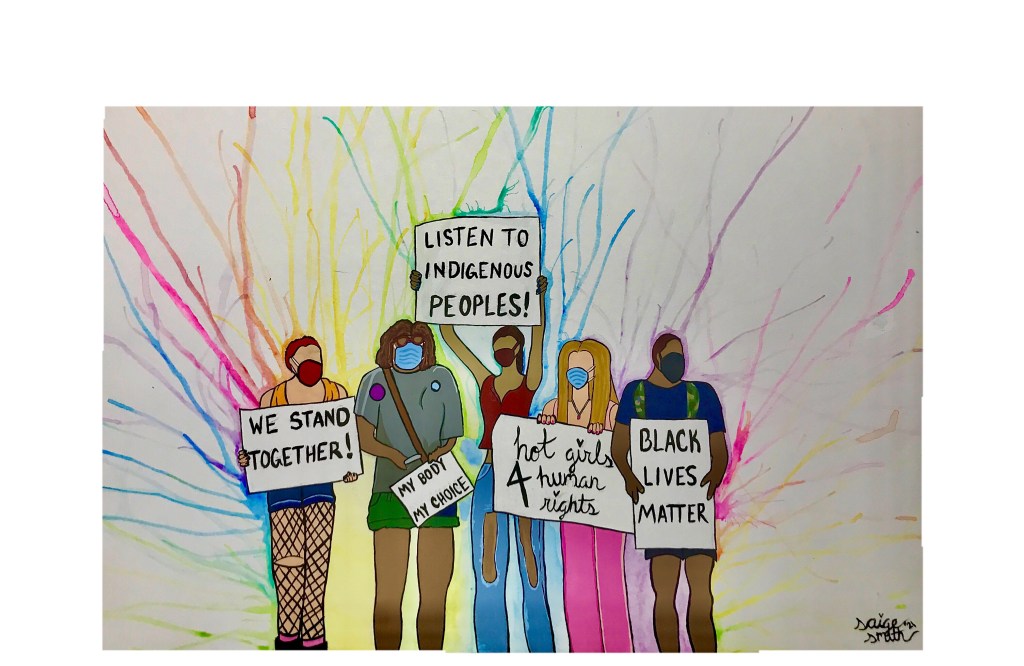
The right to protest is a fundamental human right guaranteed by the First Amendment of the Constitution, however police and government officials are allowed to place certain types of restrictions … Continue reading What to Expect at Your First Protest: Tips & Essentials
 Craftivist The Activist
You must be logged in to post a comment.