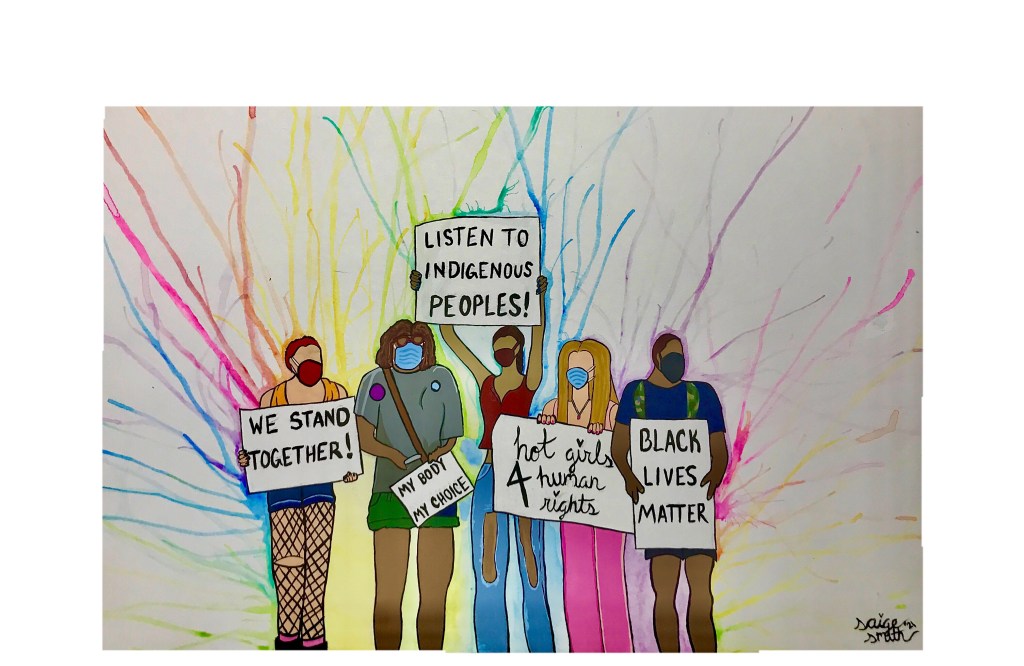
The right to protest is a fundamental human right guaranteed by the First Amendment of the Constitution, however police and government officials are allowed to place certain types of restrictions on acts. This will be a thorough guide on things you should be aware of before attending your first protest.
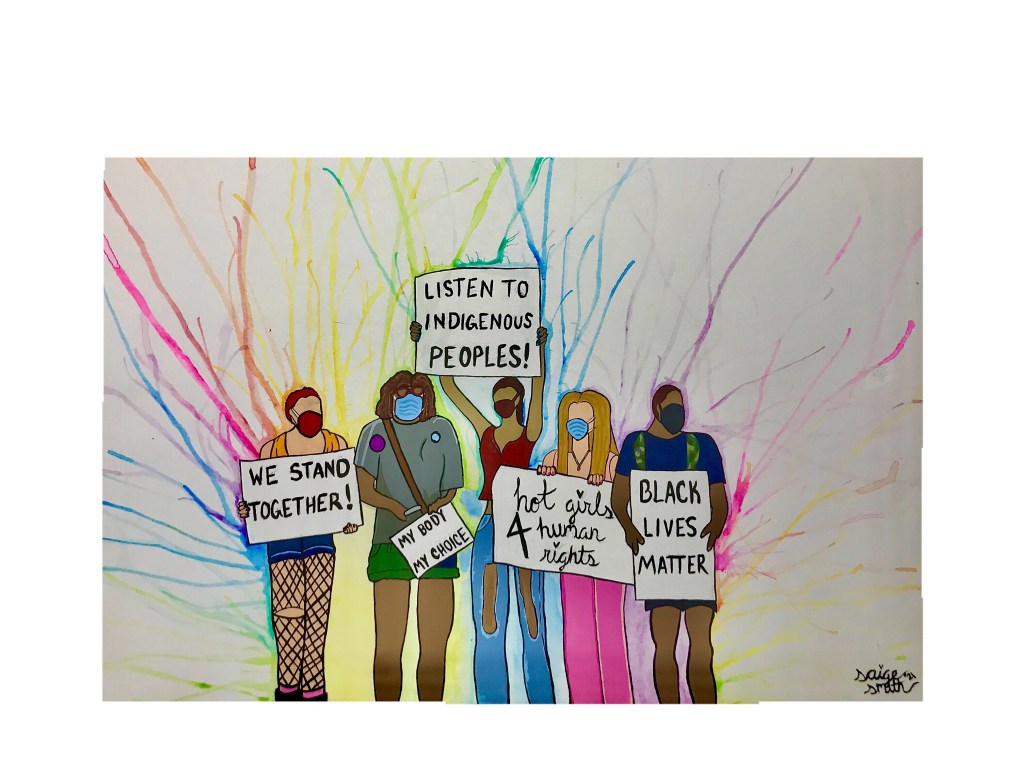
Before Going
Know what it is your’e protesting before you decide to go. Is it in response to a new law that’s been proposed/enacted? Police brutality? An international conflict? Basic needs consistently unmet? Don’t expect those at the protest to educate you on every detail as to why people have organized this event. It’s very important to realize that protesting is more than just about you. Make sure to be aware of local ordinances in the city the protest is taking place in.
Coming Prepared
- Make sure to dress for the weather (rain-gear, sunglasses, hats, in layers if its cold) & wear comfortable shoes!
- A mask or bandana to help keep our immune-compromised friends stay safe.
- A small bag or fanny pack to hold your personal items.
- Bring water & something light to snack on. Protest organizers may have these available, but it’s good to have your own just in case they don’t.
- Signs or literature to pass out. Make sure signs are bold and legible.
- Your charged phone & a power bank–on this note, it may also be a good idea to leave your phone at home to protect your identity and prevent surveillance.
- If you do bring your phone keep it in airplane mode unless you need to it.
- Turn off location services & disable your GPS.
- Never unlock your phone for the police or consent to a search of your phone if you are stopped by the police.
- Remove fingerprint & face-id unlock, as these do not require a warrant.
- Use Signal App for all organization communication. It is end-to-end encrypted & preferably use disappearing messages.
- Have the National Lawyers Guild’s phone number on you, or other emergency contact, (write it on your body) in case you get arrested or if you see someone get arrested. Phone number for NLG: 212-679-6018.
During The Protest
Okay so now you’re at the protest. What should you expect? What do you do?
- Bring or make a friend. It’s always a good idea to have a buddy.
- Check out any of the organizers tables, if they have any set up. Some protests will have organizations related to the cause tabling to help spread awareness.
- These tables will also be where any snacks/drinks are if they’re available.
- Sign up with an organization or sign a petition.
- Organizers may walk around with clipboards collecting signatures and sign ups.
- Listen to what the speakers have to say.
- Typically there will be speakers either before or after the march. They speak on a variety of topics from various struggles marginalized communities face and bring more nuanced perspectives to light.
- Keep an eye out for any counter-protesters/antagonists; this includes the police.
- If you notice any counter-protesters who are instigating participants, notify a protest marshal or one of the organizers.
- Protest marshals help ensure the safety of march participants in large demonstrations.
- If you see police brutality and its safe and possible for you to do so, record it. You are well within your rights to record what you see happen at a protest.
- The ACLU has a good run-down of our rights as protesters and what to do if you’re stopped by police in general.
- If you notice any counter-protesters who are instigating participants, notify a protest marshal or one of the organizers.
After the protest
The protest is done. You’ve now gone home. What else is left to do exactly?
- Post any photo’s or video’s you have on social media to bring awareness (as long as it’s safe for you to do so).
- This includes any police brutality you may have caught on film.
- Follow any organization’s you encountered on social media.
- They’ll keep you updated on upcoming events, related news, and more direct action you can take in the future.
Good luck out there to my fellow Comrades. Stay hydrated, stay knowledgeable, and most importantly stay safe!
Discover more from Craftivist The Activist
Subscribe to get the latest posts sent to your email.
 Craftivist The Activist
You must be logged in to post a comment.